
Revealing the Production Process of Pogopin: Precision Manufacturing Creates Reliable Electronic Connectors
As a core connecting component for products such as mobile phones, medical devices, and avionics, the production of pogopin relies on high-precision processes and strict quality control. Though seemingly small, this part undergoes multiple core procedures to achieve key performances like stable conductivity and strong contact force.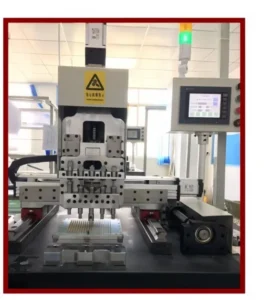
Raw Material Selection and Preliminary Processing
The core raw materials of pogopin must meet requirements for conductivity, wear resistance, and corrosion resistance. All raw materials undergo strict incoming inspection before storage to ensure material purity and specification compliance, eliminating quality hazards at the source.
Core Processes: Electroplating and Assembly
Electroplating is a critical step determining pogopin’s conductivity and durability. Pre-treated needle tubes and pins undergo gold plating, which not only enhances conductivity but also improves oxidation and corrosion resistance, ensuring stable performance during long-term use. This process usually takes 1-2 days to complete.
Finished Product Inspection, Packaging and Delivery
The production of pogopin adheres to the principle of “layer-by-layer quality inspection” throughout. Finished products undergo full visual inspection to check for defects such as scratches and deformation, while professional equipment tests key indicators like dynamic impedance and conductive performance.
Precision Craftsmanship Creates High-Quality Pogopin
The production of pogopin is a closed-loop process encompassing raw material selection, high-precision processing, and strict quality inspection. Every procedure, from turning to electroplating and assembly, embodies the ingenuity of precision manufacturing.