
Basic Knowledge of Pogo Pins
Pogo pins were first developed in the early 1970s at Bell Labs and were initially designed for semiconductor testing equipment because they are suitable for high-precision, miniaturized, and repeatable electrical connections. Since then, with improvements in mechanical stability, current handling, and compact design, their role in the industry has greatly expanded. These advancements have made pogo pins widely applicable, including in consumer electronics, industrial systems, and medical devices.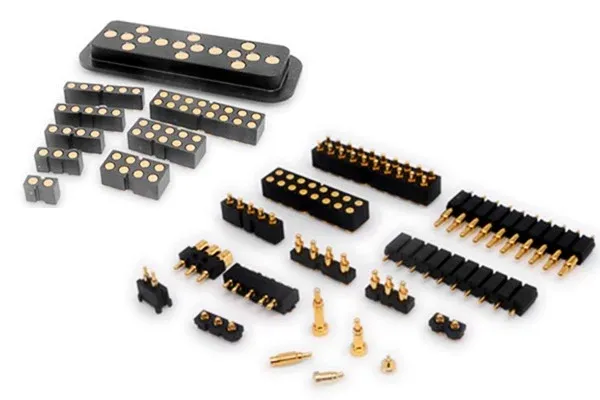
Each pogo pin consists of three main components: a barrel, a plunger, and an internal coil spring. Typical materials include brass or beryllium copper alloys, with a nickel plating on the surface to improve durability and corrosion resistance. For applications requiring lower contact resistance, gold or other precious metal plating is often used. In high-density assemblies, pogo pins are arranged closely to form multiple contact points on circuit boards or in connectors that are frequently plugged and unplugged. This dense configuration enables efficient and reliable connections and can withstand repeated use, which is crucial for many modern electronic applications.