
Exploring Pogo Pin: The Vast World of a Tiny Connector – A Comprehensive Analysis and Application Guide
What is a Pogo Pin? Definition and Basic Structure
A Pogo Pin (also known as a spring-loaded pin, pogo pin connector, or spring probe) is a precision connector composed of three main parts: a plunger (pin head), a spring, and a barrel. Its name derives from the spring mechanism similar to a “pogo stick,” which enables stable electrical connection during compression and release cycles.
Core Structure Breakdown:
Plunger (Pin Head): Typically gold-plated, it makes direct contact with the connection point and is responsible for conducting current or signals.
Spring: Provides stable contact force and return/rebound performance.
Barrel: The housing, which secures the entire structure and guides the plunger’s movement.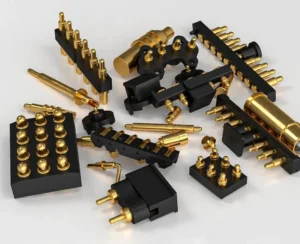
Technical Advantages of Pogo Pins: Why Are They So Popular?
1. Exceptional Electrical Performance
Low contact resistance (typically <30mΩ) High current-carrying capacity (some models can exceed 10A) Stable signal transmission, suitable for high-frequency applications 2. Mechanical Durability Extremely long service life (standard products can achieve 50,000 to 1,000,000 mating cycles) Excellent resistance to vibration and shock Self-adaptation to different surface planarity and positional misalignment 3. Design Flexibility High degree of customizability (size, shape, spring force, etc.) Supports Surface Mount Technology (SMT) and Through-Hole Technology (THT) Multiple arrangement options to meet various layout requirements